News overload

Much too much news is going on for me to follow with any clarity.

The Republicans, backed by the rich Koch brothers, are trying across the nation to destroy the public service unions.

Meanwhile, the Tea Party wants to shut down the federal government.

The Middle East is erupting. Quadaffi, Gadahffi, Kadaffy Duck, however he spells his name is unraveling, not that he’s had much to unravel to begin with. Sorry for the sentence ending with a preposition.

A major earthquake causes devastation in Christchurch.

Pirates kill American citizens.

And I had to move next door yesterday on my day off. I’m still putting things away.

Surely it’s a news overload, for one whose business and life has been news.  It still is.

But I got to put up a clothes rack right now.

On Wisconsin …

Methinks I shall keep mostly quiet about the goings-on in Wisconsin for personal reasons, but I urge others to read about what’s going on and try to keep an open mind.

I don’t buy that America would commit suicide by allowing its leaders to gut the unions. We don’t want to go to the bad old days. Nor do we want to go to the other bad old days. The latter I am talking is the strife that accompanied the fight for modern labor, even disturbances such as  the riots among lumber workers of the early 20th century around the area where I grew up in the half of that century. I am not  saying disturbances like the Grabow Riot might happen. That would certainly be a huge setback for the American worker and society. We also don’t need knuckleheads like Glenn Beck stirring the pot to make something dreadful happen which will make him a new Messiah among the right.

Things are better for the American worker today whether you like and support the unions or you don’t. When you hear news about all that is going on with all  these uber-capitalists such as the Koch Brothers who are trying to bring us back to the days of feudalism, who are trying to break the spirit of the union and the American worker, just try to keep an open mind.

Think how far we have come and how far backwards we might go. It’s hard to do, but keep an open mind.

Playing with numbers

No, I am not writing about how numbers are being used to propagate the lie that federal workers are overpaid. I am not even writing about how two of every three new Texans are Hispanic, new Census data show.

Instead, I was mesmerized by the interactive information contained on the USA Today Web site that accompanies the story about the new Census information. Way before there were computers, at least in my life, I would look thoroughly over each new year’s “World Almanac” reading all the great facts and figures it had to offer. I read it little bits at a time, learning all kinds of what some would say was “useless information.”

My reading  reference books didn’t get me on “Jeopardy” — I must admit I kick ass in “Trivial Pursuit” — but it has helped me in my work as a writer and as a journalist. That is why I absolutely love the Internet, no matter its downsides. Yes, it provides more than one.

Probably the biggest find reading today’s Census information about Texas was not unexpected as I had been watching it happen and reading about over the years in Dallas-Fort Worth area newspapers. I am talking about the explosive suburban and the “exurban” growth, the latter being increased populations beyond the suburban areas of a major city or metropolitan area such as the “Metroplex” of Dallas-Fort Worth.  Since I am a Southeast Texan by birth and residence, I don’t know why but a great number of my friends live in the Dallas-Fort Worth area. A few friends jokingly, I suppose, call it the “Metromess.” Although I live within slightly more than an hour’s drive from Houston, I spent a good deal of time in the Dallas area over the past 20 years or so. I lived for almost a year in the small, mostly rich enclave of University Park, which is surrounded by Dallas and is home to Southern Methodist University. Likewise, I spent a couple of extended periods in Allen, which one could call a Dallas suburb,  or years ago an exurb, or even today be identified as a suburb of greater Plano.

That’s right. I knew the population for the Dallas ‘burbs were getting huge. But it’s another thing to see it in print.

Allen, in Collin County, grew by 93.4 percent between 2000 and 2010 and now hosts 84,246 residents, according to the Census Bureau. Plano, next door, has grown to almost 260,000. One could still see a lot of farmland and empty lots ripe for the picking when I first started visiting the Dallas area around 1980. Several other Metromess-area examples and growth over the 10 Census years:

  • Garland, 226,876, 5.1%
  • Arlington, 365,438, 9.8%
  • McKinney, 131,117. 141.2%
  • Denton, 113,383, 40.8%
  • Frisco, 116,989, 247%
  • Irving, 216,290, 12.9%

These are just a few examples. The new Census figures also showed some surprises for places I live in or know fairly well. Beaumont, where I  live, actually grew 3.9%, to 118,296, despite continual naysaying that it would lose folks. Waco, where I lived for seven years in the last years of the 20th century and early 2000s, had a 9.7% growth rate, to 124,805 people. That was not unexpected, but that it actually happened and had that kind of growth leaves me scratching my head. Why? I guess there’s plenty of prairie land and many more Baptists than you can shake a stick at. Like the old joke that continually circulates around Waco in one form or another, Waco is a town with one tall building  surrounded by 100,000 Baptists. In case you don’t know about the Baptists and Waco, the city is home to Baylor University. The Alico Building, a 22-story structure completed in 1911, was once the tallest building in Texas and West of the Mississippi. I guess you have to be there to get the joke.

William Cowper Brann, a  journalist in the late 1800s, regaled the rest of the U.S. with his tales of many people he called “Psalm-singing sons of bitches” with whom he had to deal with daily as editor of the popular magazine “The Iconoclast” based in Waco. Brann was in an almost perpetual fight with Baylor and its supporters and referred to Waco as “Jerusalem on the Brazos.” His role as an iconoclast had its shortcomings, however, he died from wounds he received in a gunfight with a detractor.

Perhaps Brann had something to do with Waco’s population past and present. I don’t know. While I met some nice folks in the seven years I lived there, it was the place I lived that I most disliked. Oh well. Things could be worse. At least unlike my journalistic forebear, Brann, I wasn’t shot and mortally wounded when I lived there.
Hog hunters: Don’t shoot that bear

A very interesting poster caught my eye Tuesday as I was walking into a cafe located in the Big Thicket area of Southeast Texas. The poster warned hunters of the similarity — in profile at least — of feral hogs and black bears.

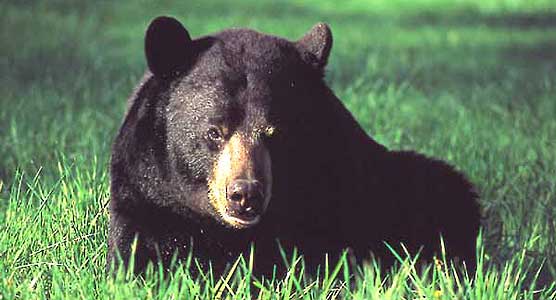
Such a notification would not likely raise an eyebrow in other parts of the U.S., but here in the pine and hardwood river bottoms of eastern Texas it is evocative of a bygone time when those woods were full of bears. That was a period way before my time. By the 1940s the Louisiana Black Bear was considered “extirpated” from  Texas, according to the Black Bear Conservation Coalition. That group is dedicated to restoration of the Louisiana Black Bear to its original habitat. The state listed the black bear as “endangered” in 1987 and upgraded to “threatened” in 1996. The mammals were anything but threatened in the area a bit more than 100 years before that last biological designation.

Photo -- U.S. Fish and Wildlife Service

Texas Parks and Wildlife Department information on the black bear noted that during a two-year period in the mid-1880s, two hunters in Liberty County were said to have killed more than 180 bears within a 10-mile radius of the Trinity River bottoms. A Hardin County bear hunter named “Uncle Bud” Brackin had 305 bear hides when he stopped hunting bears in 1887 because they became too scarce.

During the time I grew up in East Texas — during the 1960s and 70s — a bear sighting would be reported although such visual captures were probably as much legend as fact. I do remember in the late 60s or so that someone killed a bear, I believe, that was somewhere in the woods north of Deweyville in the south most part of Newton County. I remember hearing game wardens say that the bear probably had strayed across the Sabine River from a federal wildlife preserve in Southwest Louisiana’s Calcasieu Parish.

More bears have returned to East Texas though. One of my brothers set up a camera on a deer feeder and snapped a photo of one coming around recently. Other bears have been photographed that way as bears, despite what you see in toilet paper commercials, like to eat instead of going to the can all day. Some groups like the bear coalition want to see more bears. Such an effort faces a lot of obstacles, or so it would seem, the least of which would be people to whom bears would be unwelcome guests.

I suppose the biggest thing to take away here is from that warning poster I saw. It says hunters can mix up a bear profile with a wild hog. I guess some would say that is ridiculous but if you have ever seen any of the “pineywoods rooters” around here you would understand. Those can be some ginormous swine. Shooting a bear here in East Texas does not come cheap if you get caught either. One may face penalties of up to $10,000, additional civil restitution for what the bear is worth, jail time, and loss of all hunting privileges.

So, if you are hunting hogs out there, make sure it is a hog you are shooting and not a bear. Nor Bigfoot. He/its been known to roam around these parts too and he/it might not take to kindly to it being shot, if you know what I mean.