A best picture race for an Oscar and the surrounding hoodeleyap

It’s the day after the pri­mary elec­tions here in Texas. I hope everybody’s can­di­date won. Think about that for a minute.

These days I don’t make it to the movies much any­more. I don’t know why. But I have been fol­low­ing all the buzz about a nom­i­nee for Best Pic­ture at the Acad­emy Awards this week. Of course, there is always some buzz sur­round­ing the cov­eted of the cov­eted Oscars. It’s office pol­i­tics, which I don’t like at all. So I sure as hell don’t like the office pol­i­tics of the Oscars. This year in par­tic­u­lar it’s dis­gust­ing — sort of — and I’ll tell you why if you don’t go off in a huff and leave what you are read­ing. Don’t worry, I’ll get there soon. Soon enough.

Most of the hood­e­leyap (Hey, that’s a good word I just made up! It’s pro­nounced “WHO-del-e-yap,” only faster and means bodoug­ley­pot. “BO-doo-gul-e-pot”) con­cern­ing the Oscar for best direc­tor is over the 2/3rd’s computer-generated Avatar directed by James Cameron and Hurt Locker, which is directed by Cameron’s ex-wife Kathryn Bigelow.

Cer­tainly, the media has made much of pos­si­ble Oscars going to one of a divorced, but friendly, ex-couple who directed these films. Also, if Bigelow wins she will be the first woman to win the hideous-looking gold stat­uette for direct­ing. Other sideshows to this story have like­wise appeared to build up the hype for the Oscars and their poten­tial winners:

  • While Hurt Locker — a story about an explo­sives demo­li­tion unit on a tour of duty in Iraq — has received crit­i­cal acclaim the film also has drawn the ire of some Iraq vet­er­ans and active duty sol­diers. They say the thriller doesn’t real­is­ti­cally por­tray sol­diers doing their job, that it makes troops seem reck­less and has other less-than-authentic aspects. This is even though Defense Sec­re­tary Robert Gates liked and rec­om­mended the movie while the mil­i­tary with­drew its assis­tance in the film in 2007 for unflat­ter­ing por­tray­als of sol­diers. Uh, you want real­ity? Go watch C-SPAN.
  • Yes­ter­day Nico­las Chartier, one of the Hurt Locker’s pro­duc­ers, was barred from the Oscar pre­sen­ta­tions for e-mailing mes­sages to Acad­emy mem­bers that ask for their votes for the film. No tux and red car­pet for you, Mr. Chartier!
  • Today an Army mas­ter sergeant and bomb expert filed a suit against the film’s screen­writer, who is also one of the pro­duc­ers, for exploit­ing the sergeant’s ser­vice. The sol­dier claims the film is based on his expe­ri­ences and that he coined the term “Hurt Locker.” Maybe he did. Maybe he didn’t. Maybe he halfway did.

Well, like “they” say, no pub­lic­ity is bad pub­lic­ity. Or maybe it is. But it’s Oscar time! Break out the 40-year-old sin­gle malt and the good sil­ver­ware! That’s not in my case of course, and I most likely, more than most likely won’t be watch­ing the Oscars. But I have to admit, I would like to see the movie, the Hurt Locker.

It’s another one of those far-off Hol­ly­wood hap­pen­ings — the afore­men­tioned hood­e­leyapthat don’t really mean any­thing or mat­ter in the least to the aver­age beer-swilling and gun-toting Amer­i­can who washes up once a week and goes to the pic­ture show. But I sup­pose all the hype makes us want to watch the car wrecks on the big screen which will, in this case, be big impro­vised explo­sive devices that go “boom.”

Happy Veterans Day: I’m no hero

veteran


I am a veteran.

I didn’t fight in any war when I joined the Navy in 1974 but because our nation’s involve­ment offi­cially ended after the events sur­round­ing the fall of South Viet­nam in 1975 I am called a “Viet­nam Era Veteran.”

That doesn’t mean a lot, espe­cially to those who actu­ally fought and endured the unimag­in­able in Viet­nam. But we couldn’t stop hav­ing a Navy after Viet­nam and some­body had to steer those ships and swab those decks and, in my case, push and type those papers. Some­one had to do it dur­ing a time when being in the mil­i­tary wasn’t the coolest thing a young per­son could do.

Although my par­ents had a Navy sticker on their pickup — I was the third son to join the Navy — you didn’t see rib­bons on cars with the names of their sol­dier boys who were serv­ing listed on it. You didn’t see every sun­shine patriot and vote-needy politi­cian call­ing those of us  who served “heroes.”

 It wasn’t the best of times to be in the ser­vice. And it wasn’t the worst, by a long shot. It was, after all, the 1970s.

 You can bet your ass that I bitched and moaned through­out my tour of duty. It’s what ser­vice mem­bers do. There were petty, lit­tle reg­u­la­tions that seemed absolutely stu­pid. You could often find your­self fol­low­ing your orders from a tyrant, but unlike in the civil­ian world you couldn’t talk back or couldn’t quit because you could end up end trou­ble. The worst case sce­nario would be the brig, or jail. Those Marine guards in the brigs didn’t exactly play nice, at least that’s what I heard. Remark­ably, I never — offi­cially — got in trou­ble and wound up with an Hon­or­able Dis­charge and a Navy Good Con­duct Medal. The last I fig­ure was quite an achieve­ment con­sid­er­ing all the hell-raising I did both on and off duty.

 So I am no hero. I was just a kid out of high school who needed a job, wanted badly to attend col­lege but couldn’t afford it, the Navy needed some­one who did their job and did it very well. After fin­ish­ing my job, the gov­ern­ment paid me a nice lit­tle stipend under the GI Bill that made it most help­ful to become a col­lege grad­u­ate. And the rest is history.

 That’s my vet­eran story. It isn’t a heroic tale but it’s my own and I’m stick­ing to it.

Free meals for vets; Pick your fave Texans goat.

 Some national cor­po­ra­tion are thank­ing vet­er­ans this year by putting their money where the vet­er­ans’ mouths are.

 But show­ing appre­ci­a­tion for those who are serv­ing or who have served this year will not be lim­ited to free din­ners from Golden Cor­ral on Mon­day,  Novem­ber 16, and Applebee’s on Wednes­day evening (Vet­er­ans Day).

 Lowe’s is offer­ing a 10 per­cent dis­count on in-store mer­chan­dise up to pur­chases of $5,000 from Nov. 6 through Vet­er­ans Day. This is accord­ing to media reports I have seen. I saw noth­ing on their Web site about it. I would call first and ask if inter­ested. Home Depot is like­wise offer­ing a 10 per­cent dis­count through Vet­er­ans Day. Check the Web site arti­cle for lists of limitations.

 I am unsure how long any of these cor­po­ra­tions have shown their appre­ci­a­tion for vet­er­ans other than Golden Cor­ral. The buf­fet and grill restau­rant has held the Vet­er­ans feast for the past eight years. Their Web site notes they have served more than 2.1 mil­lion meals to active duty mil­i­tary and vet­er­ans dur­ing these occasions.

 Applebee’s requires some kind of proof of ser­vice such as a pic­ture of the vet­eran in uni­form, mil­i­tary or retired mil­i­tary ID card, DD-214 or vet­er­ans orga­ni­za­tion card. Their list doesn’t include a VA patient ID card, so I wouldn’t count on that get­ting you a free din­ner. Applebee’s is also offer­ing a lim­ited num­ber of items on their menu for the gratis meal — six to be exact — but they all look pretty good.

 Golden Cor­ral does not require proof of ID. I still would take some though. You never know if your waiter under­stands the rules and hav­ing your papers in order might avoid hav­ing to get a man­ager and mak­ing a scene. I have been only once for Golden Corral’s meal, a cou­ple of years ago, and I wasn’t asked for an ID.

 A num­ber of other restau­rants and busi­nesses are giv­ing free or dis­counted meals or mer­chan­dise across the coun­try includ­ing, or did so over the week­end. Some of these also honor those uni­formed folks serv­ing in pub­lic safety such as police, fire and EMS. You just need to check around and see, I sup­pose, because I don’t have a full list. I wish I did.

WHAT A DISAPPOINTMENT

  Dis­ap­point­ing would be an appro­pri­ate word to describe yesterday’s Houston-Indianapolis game.

  The Tex­ans came in with a respectable 5–3 record for the first time in their his­tory against the unde­feated Colts. Still, there was no way the Tex­ans could beat Indi­anapo­lis, right? Well, even though they weren’t throw­ing hand grenades or play­ing horse­shoes, they almost pulled off an upset. Even more, the Tex­ans should have won this one.

  A big exam­i­na­tion was tak­ing place on Beaumont-Houston’s ESPN Radio, the Ticket, this after­noon, as to the blame for the Tex­ans 20–17 loss to the Colts. It was a con­tro­ver­sial fum­ble at the Colt’s one-yard line by Hous­ton run­ning back Ryan Moats, said some. It was flat out turnovers and stu­pid penal­ties, said oth­ers. It was kicker Kris Brown, still oth­ers said while you could almost see heads nod­ding through the many radio receivers through­out the Houston-Beaumont area.

 Brown could eas­ily be seen as the goat that ate the chance to knock off the Big Dog Colts. The Colts saw their lead cut to a nar­row mar­gin at the end of the first half when the Tex­ans’ kicker per­fectly nailed a 56-yard field goal. Brown, com­ing into the game, had a per­fect extra point record and he left with that intact at 25-for-25 upon leav­ing Indy. He wasn’t exactly Mr. Auto­matic with 9-for-13 com­ing into the game but nei­ther was he Mr. Aro­matic. That path to Mr. Smelly quickly changed in the esti­ma­tion of some Tex­ans fans when Brown had a chance to send the game into overtime. 

 But just as plane crashes hardly ever have one cause, nei­ther do lost foot­ball games. Some­how the clock quickly ticked off until it was stopped at one sec­ond — amaz­ing in itself that Hous­ton didn’t lose because of poor time man­age­ment. Brown seemed like a sure shot for a 42-yarder to tie after kick­ing one a very respectable 56 yards. How­ever, the ball went up and up and just freak­ing missed the goal with a veer to the left.

  Well, Coach Dan Kubiak thought his team did okay con­sid­er­ing they were play­ing Pey­ton Manning’s Colts. I have to say I feel the same way although, as I men­tioned before, I am very disappointed.

 As for one goat. It wasn’t Kris Brown. It wasn’t one play. It wasn’t the refs. It wasn’t Moats’ fum­ble. It was all of those wrapped up with penal­ties that were just dumb, though as I have noted  here before I sure as hell couldn’t have done better.

 The Tex­ans now are nei­ther down nor are they out. They have to play the Colts again at the end of this month and beat them. They have to beat the Titans again the week after next week’s bye. That the­o­ret­i­cally should be easy against a now 2–6 team that only picked up its sec­ond win just yes­ter­day by beat­ing the equally lack­lus­ter 49ers. But the­o­ries are like a**holes, everybody’s got one and every once in awhile some­thing goes wrong with them. Then you got your Rams, Sea­hawks, Jaguars and Dol­phins in no par­tic­u­lar order fol­lowed at the end by the Patri­ots. The Patri­ots. Yes.  Uh-huh.

 So the Tex­ans can still make the play­offs. Hell, they could go to the Super Bowl. I mean any­thing can hap­pen and does hap­pen in foot­ball, just look at Ter­rell Owens or John “Sandy Baby” Rig­gins — remem­ber the latter’s drunken encounter with Supreme Court Jus­tice San­dra Day O’Connor? Per­haps those aren’t the best examples.

VA to open care to about 250,000 new vets

If you are a mil­i­tary vet­eran who has thought about sign­ing up for vet­er­ans health care but couldn’t, and if you don’t mind social­ized med­i­cine, then you just might be eli­gi­ble now for VA care.

The Depart­ment of Vet­er­ans Affairs sus­pended open­ing up health care to so-called “rich” vet­er­ans in 2003 because of bud­get con­straints. These are the vets who do not have dis­abling ill­nesses or injuries that are related to mil­i­tary ser­vice but whose income is above a set thresh­old. The income lev­els are geographically-based and an enroll­ment cal­cu­la­tor for ben­e­fits can be found here. Don’t let the word “rich” fool you. It’s cer­tainly not a $100,000-$200,000 level.

Dr. Blase Cara­bello, act­ing direc­tor of the Michael E. DeBakey VA Med­ical Cen­ter in Hous­ton, said the rule allow­ing the addi­tion of about 250,000 addi­tional vet­er­ans for health care should take effect June 30 “if the reg­u­la­tory process pro­ceeds smoothly.” That is always a big “if” when deal­ing with the VA or most any other fed­eral branch.

Con­gress opened the VA health sys­tem in 1996 to vet­er­ans other than those with service-related dis­abil­i­ties or the indi­gent. Poor fund­ing and an explo­sion of vet­er­ans seek­ing health care closed the sys­tem to new enrollees under the Bush admin­is­tra­tion in 2003. Those, such as yours truly, who were already enrolled were grandfathered.

It is true I bitch about the VA health care sys­tem some­times. It is cer­tainly not a per­fect sys­tem and it isn’t the best model for a social­ized health care. But to be fair, it does pretty well  in most places with the fund­ing it receives. Each VA regional sys­tem is a lit­tle dif­fer­ent from the other, although they have indi­cated that they want to fix that. If you are dead-set on one type of med­ica­tion, you aren’t always going to get it in one VA sys­tem but might in another. Some sys­tems, hos­pi­tals and out­pa­tient clin­ics are excep­tional. Some are dreadful.

But when the VA is all that you’ve got then, well, it’s all you got. Like just about any ser­vice of any kind in the United States, if things aren’t work­ing well for you then you need to raise 10 kinds of hell and you might just get your feel­ings across. The same goes for deal­ing with the VA.

Houston VA: Ve Vant to see your papers!

If you are going to the Depart­ment of Vet­er­ans Affairs com­plex in Hous­ton begin­ning Wednes­day, July 29, you bet­ter have some offi­cial VA iden­ti­fi­ca­tion — either for employee or patient.

Hous­ton VA offi­cials said in a press release hot off the mojo wire this after­noon that all vehi­cles enter­ing the com­plex will be stopped and occu­pants will be required to show some form of  VA iden­ti­fi­ca­tion. Required is a VA iden­ti­fi­ca­tion badge, VA park­ing tag, vet­eran iden­ti­fi­ca­tion card or an appoint­ment letter.

The mas­sive ID check for the busy com­plex which includes both the VA Regional Office and the Michael E. DeBakey Vet­er­ans Hos­pi­tal is an attempt to reduce unau­tho­rized  park­ing at the cen­ter, which is located in Houston’s busy Texas Med­ical Center.

Any­one who has ever been to the Hous­ton VA hos­pi­tal can appre­ci­ate the dif­fi­culty in find­ing park­ing, espe­cially in the morn­ings. This seems to be a prob­lem at many VA hos­pi­tals. But such an iden­ti­fi­ca­tion check does raise ques­tions. If the check is at the entrances to the cen­ter, what effect will it have on traf­fic, espe­cially those cars headed on Hol­combe Boule­vard in the morn­ings for the many dif­fer­ent Hous­ton hos­pi­tals? What about the vet­eran from Podunk, Texas, who left his appoint­ment let­ter at home, 100 miles away? What about the vet­eran who is going to the VA for the first time to enroll for ser­vices and has no ID, only his proof of mil­i­tary ser­vice? Finally, what about the many vet­er­ans who are not going to see this lit­tle notice because the major­ity of the news media, espe­cially out­side Hous­ton, are not going to report such information?

It kind of makes you won­der. But hey, I did my part. If you have any ques­tions, call the Hous­ton VA police through the main hos­pi­tal num­ber, and good luck get­ting through. It can be quite chal­leng­ing to call some­one at the Hous­ton VA hos­pi­tal. Then again, patience is a nec­es­sary virtue for VA patients.

The road to good intentions is paved with, well?

Veteran_small

Con­gress — on occa­sion — passes laws that have some good or at least a good intention.

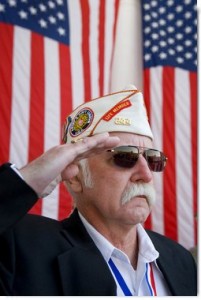
One would hope, at least, some good inten­tions spurred law­mak­ers to add rid­ers to the Defense Autho­riza­tion bills in 2008 and 2009 which expanded the abil­ity for vet­er­ans who are not in uni­form to ren­der a hand salute.

In the past, only mem­bers of vet­er­ans ser­vice orga­ni­za­tions who wore their organization’s offi­cial head­gear were tra­di­tion­ally allowed to hand salute dur­ing the National Anthem, accord­ing to an arti­cle on Military.com. Vet­er­ans and other civil­ians not in uni­form  — like­wise a tra­di­tion — nor­mally place their right hands over their “hearts” in lieu of a military-style hand salute for the play­ing of the anthem and other flag-related activities.

Thanks to an amend­ment in the 2008 Defense Autho­riza­tion Act retired mil­i­tary mem­bers and vet­er­ans can now give a hand salute when­ever the U.S. flag is raised, low­ered or passes.

A 2009 amend­ment to that fis­cal year’s defense bill allows out-of-uniform mil­i­tary per­son­nel and vet­er­ans to ren­der a hand salute dur­ing the National Anthem.

Now the grow­ing num­ber of peo­ple in the U.S. who have no con­nec­tion what­so­ever with the mil­i­tary and even some vet­er­ans them­selves might won­der why would such a law be passed?

The answer is that there was  obvi­ously some sen­ti­ment among vet­er­ans and mil­i­tary retirees, not to men­tion some of the pow­er­ful vet­er­ans orga­ni­za­tions, for cod­i­fy­ing such a prac­tice. Why? I don’t know. It seems as if the law lacks some prac­ti­cal­ity inso­far as enforce­ment is concerned.

Let’s say you are at a high school foot­ball game. The National Anthem is played and the col­ors are pre­sented on the field by the local Junior ROTC drill team. You, the vet­eran, are wear­ing a big pair of horns on your head because your team is the Long­horns. Now do you do the hand over your chest or give the mil­i­tary hand salute?

Okay, say you give the hand salute. A local cop sees you comes over and starts grilling you about being in civvies and giv­ing a military-style salute. You say it’s legal now. The cop said he never heard any­thing about it. You say: “Trust me.” The cop says: “Okay. I’ll trust you if you can show me some ID prov­ing you are a veteran.”

Now one might think such a request would be easy. But it isn’t nec­es­sar­ily all that simple.

You, the vet­eran with the long­horn hat, spent your four years and got out of the ser­vice. You have your DD-214 form which proves your ser­vice — some­where — although it is not on your “per­son,” as the cop who ques­tioned you might say. You didn’t retire from the ser­vice so you don’t have a mil­i­tary retiree ID card. You don’t go to the VA for health care so you don’t have a VA iden­ti­fi­ca­tion card. You don’t belong to the VFW, Amer­i­can Legion, DAV or any other vet­er­ans orga­ni­za­tion. Basi­cally, you are SOL to use a good old mil­i­tary acronym until you call up the county clerk in the next state where you filed your DD-214 after get­ting out of the ser­vice and ask her to send a copy to the local authorities.

Now that sce­nario about the ball game and the has­sle by the cops and all the trou­ble is a lot of hyper­bole. Heck, I have no idea as to whether there even is any enforce­ment mech­a­nism in laws which let you honor the flag with that sharp, five fin­gers (if you got ‘em) salute with the tip of your index fin­ger next to the right eyebrow.

If I ever gave a mil­i­tary salute, it would prob­a­bly be in a sit­u­a­tion in which other vet­er­ans might do the same thing, say at some kind of vet­er­ans pro­gram or maybe a funeral with mil­i­tary honors.

Per­son­ally, I have always thought the hand salute is pretty cool. It is a sign of respect unlike so many oth­ers, which car­ries with it non-verbal cues aimed toward the object or indi­vid­ual one is saluting.

For instance: You salute an offi­cer you don’t know. You are salut­ing his posi­tion and author­ity. You salute an offi­cer you do know and like. You are say­ing: “Hey, what’s hap­pen­ing bud?” with­out being insub­or­di­nate. You salute an offi­cer you know and don’t like. You are say­ing: “I respect your rank. Now chuck you farley.”

So just remem­ber when you see a civil­ian salut­ing the flag or dur­ing the National Anthem that Con­gress gave this man or woman the right to wear their civil­ian clothes and give a good old military-type hand salute, one each, because of the sac­ri­fice these folks made for their coun­try. As to whether they are really vet­er­ans, I guess you’ll just have to take it on faith. Or ask to see some ID, at your own risk. You cer­tainly wouldn’t want to get gored by those horns.