Newspapers lacking passion, says WP columnist

Dan Froomkin, whose White House Watch column appears on washingtonpost.com, penned a thoughtful piece for the Nieman Journalism Lab expressing the need for more passion in American newspapers.

Passion seems like a funny word to bandy about in connection with newspapers. That is, it is a rather odd association unless your experience with newspapers has only consisted of consuming the news. For many, though not all, who have toiled in some aspect of creating the beast that sometimes the final news product can be passion is a driving force that produces conscious consideration much less than that of a paycheck.

The problem with newspapers today, says Froomkin, is newspapers “play it too safe.”

“We need to come to terms with the fact that one reason we’re having such a tough time is that we are still fundamentally failing to deliver the value of our newsroom to Internet users,” he said.

What journalists do and are, and what Internet readers desire, is no different now than it has been way before the Internet arrived — at least as core principles are concerned. As Froomkin points out papers are more hindered than helped by a format that had more value in days past — the notion of objectivity originally used to bring in a wider readership is a good example he uses.

Froomkin said that the Internet does not work on a daily schedule and “abhors the absence of voice.”

“If we were to start an online newspaper from scratch today, we’d recognize that toneless, small-bore news stories are not the way to build a large audience — not even with “interactive” bells and whistles cobbled on top,” Froomkin said. “One option might be to imitate cable TV, and engage in a furious volume of he-said/she-said reporting, voyeurism, contrarianism, gossip, triviality and gotcha journalism. But that would come at the cost of our souls. The right way to reinvent ourselves online would be to do precisely what journalists were put on this green earth to do: Seek the truth, hold the powerful accountable, expose the B.S., explain how things really work, introduce people to each other, and tell compelling stories. And we should do all those things passionately and courageously — not hiding who we are, but rather engaging in a very public expression of our journalistic values.”

Some of the above is already done, Froomkin said. However, too often the powers that be obscure great stories in what he calls a “pseudo-neutrality” as well as other perceived sins such as newspapers fleeing from tone like lawyers running from Dick Cheney with a shotgun.

Perhaps a more simplistic notion would be that newspapers have been cornered by their own successes now that the immediacy and so-called “all the news all the time” of the Internet and Cable TV has made news (almost — I don’t think it’s completely there yet) a 24/7 phenomenon.

It’s like I was telling a friend with whom I had lunch today if I could only find a way to make money with the Internet … The same goes for those newspapers left standing to deliver a news product for a new frontier. To be or not to be may be the question but money is the answer.

Here we go again

The Obamarama made his first pick for the Supremes today, Sonia Sotomayor of the 2nd U.S. Circuit Court of Appeals. Sotomayor has a pretty compelling back story. It appears she doesn’t have a long judicial trail. But nevertheless, one may count on the opposition party on the Senate Judiciary Committee to bruise the candidate as much as is possible. It’s not just a GOP thing, as one should only look back at Justice Samuel Alito’s nomination hearings after President Shrub appointed him.

It seems for as long as I can remember and I am more than a half-century old the opposition party in the Senate has made the confirmation hearings a spectacle more like “Batter the court nominee.” Were such an exercise both useful and expeditious, then perhaps I would think better of it. But I think that it is pretty simple to understand the hearings for a prospective justice are nothing more than a political opportunity that both sides can exploit for their bases who are really riled up about hot-button court issues.

Then again, if Congress would only do what it needed to do in order to better the nation as a whole I am sure we would probably accuse them of being on drugs. And, most likely, they would have to all be smoking something if the members actually did their jobs in Congress rather than play politics.

Dogs don't maim people …

The 2-year-old son of Pittsburgh Steelers linebacker James Harrison was taken to the hospital with severe but non-life-threatening injuries after he was bitten by a family pit bull. Harrison was not home when his wife let the dog out of a pen and it attacked the child.

Such stories have become all too common these days and raises many questions about who is most responsible for attacks by vicious dogs, man or dog breed. Well, say what you might about dog attacks, and specifically those which are labeled as “pit bull” attacks. There is an amazing amount of ambiguity when it comes to the reporting of dog attacks both by public officials and the media. A pit bull, or to be more precise a “bull terrier,” is ” … an exceedingly friendly dog, with a sweet and fun-loving disposition … ” according to the American Kennel Club. What actually gets reported as a pit bull attack may, in some cases, not be a bull terrier.

Today’s culture, in which some sectors believe that watching and betting on dogs killing and maiming each other, has contributed to what has become a public menace and it isn’t something limited to pit bulls. A Centers for Disease Control report said at least attacks by dogs from 25 different breeds were responsible for 238 human deaths over a 20-year period dating back to 1979. Some 58 percent of those deaths were a result of unrestrained dogs on their owner’s property.

Isn’t it fairly obviously from where the real problem stems? A Web site called pitbulllovers.com puts it very bluntly: “Pit bull attacks happen because people are irresponsible and ignorant.”

One feels reluctant to lay blame on someone when their loved ones have been hurt. But it should be mentioned that Harrison recently told reporters he skipped meeting President Obama with his fellow Super Bowl champion teammates at the White House because it wasn’t a big deal to him. It is there that we shall leave the matter with perhaps enough said.

Beaumont: You can't get to there from here

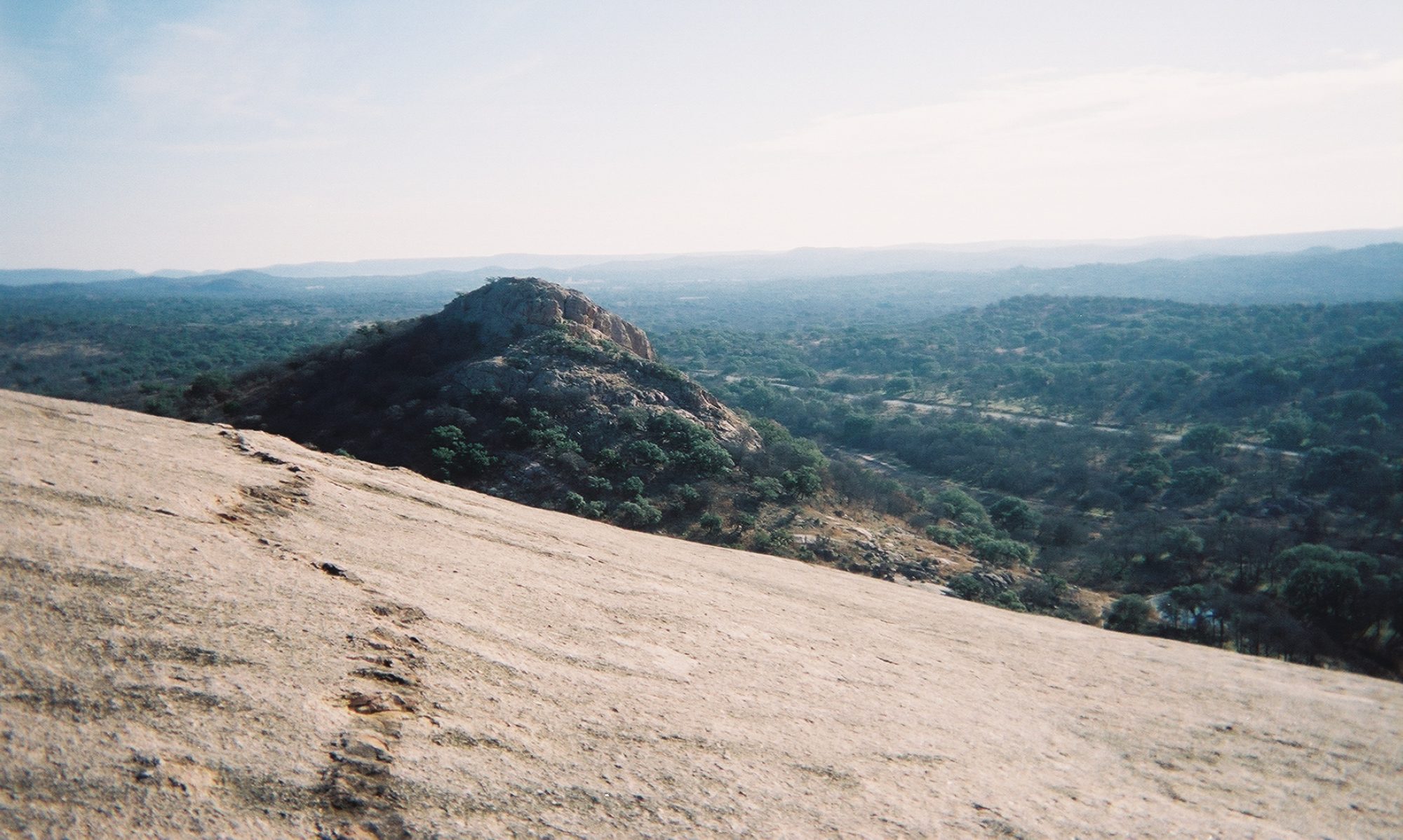
Returning home this afternoon to Beaumont, Texas, from a couple of days camping in the Angelina National Forest made me realize I should have just stayed.

As my friend, who was camping with me, ran back to Nacogdoches for a few hours yesterday to run some errands, I was left practically alone inside the little campground where we landed known as Boykin Springs. The wind was blowing ever gently yesterday and if you haven’t ever listened to the sound of pine trees whistling in the breeze in the quiet of the woods, then you have really missed something grand. While I planned to camp out only two days, I began thinking seriously about spending another day camped out.

But no. I had to come back to Beaumont, the city which should have as its motto: “You can’t get to there from here.”

For whatever reasons the city government let the streets in all but its best neighborhoods deteriorate to a state of maddening neglect. Now all of a sudden, they want to fix everything all at once. I suppose it is so they can tear it down again and make most of downtown Beaumont a lake, which is what I gather our city moms and dads want to do.

On the way back to my living spaces from downtown here is the construction, repair or other public works work I encountered. Broadway by the post office, construction. Broadway at Martin Luther King, right lane blocked on MLK for the creeping constructionism that is Calder Avenue. I turned on North Street and then hooked a right on First Street. Several blocks up, I went to turn on Ashley, which would be the shortest path of least resistance but city trucks were picking up huge limbs that someone cut down. So I continued onto Evalon, crossed Seventh Street and proceeded to Tenth Street where I would finally turn onto Ashley Avenue.

But no. That’s not happening. This lady in a hard hat and fluorescent vest comes up and said I would have to wait quite a while to get on the street. Apparently, they had resurfaced the street and were waiting to roll it down with one of those big rolling pin machines.

You get the drift though. And there is not a sign one except a sign in the middle of the street saying to turn here to get to the Exxon station on Calder, the street on which the convenience store is located and now is completely shut down in front of the Exxon station due to what I like to call the “creeping constructionism of Calder Avenue.” They are tearing the street up from downtown all the way to I-10 N-S.

The City of Beaumont apparently thinks I, nor thousands of others, have anything better to do than guess which street is going to be open when (most often our guess is not good enough). The only silver lining is that the streets are being improved, but one has to wonder if those streets which were fixed will still be in good shape by the time they finish and subsequently turn downtown into a redneck version of Venice.

Next time I go camping and have an internal debate of whether to stay or go, I think I know how I shall choose.